
Polymer flat sheet · What we have · Patent pending · 2026
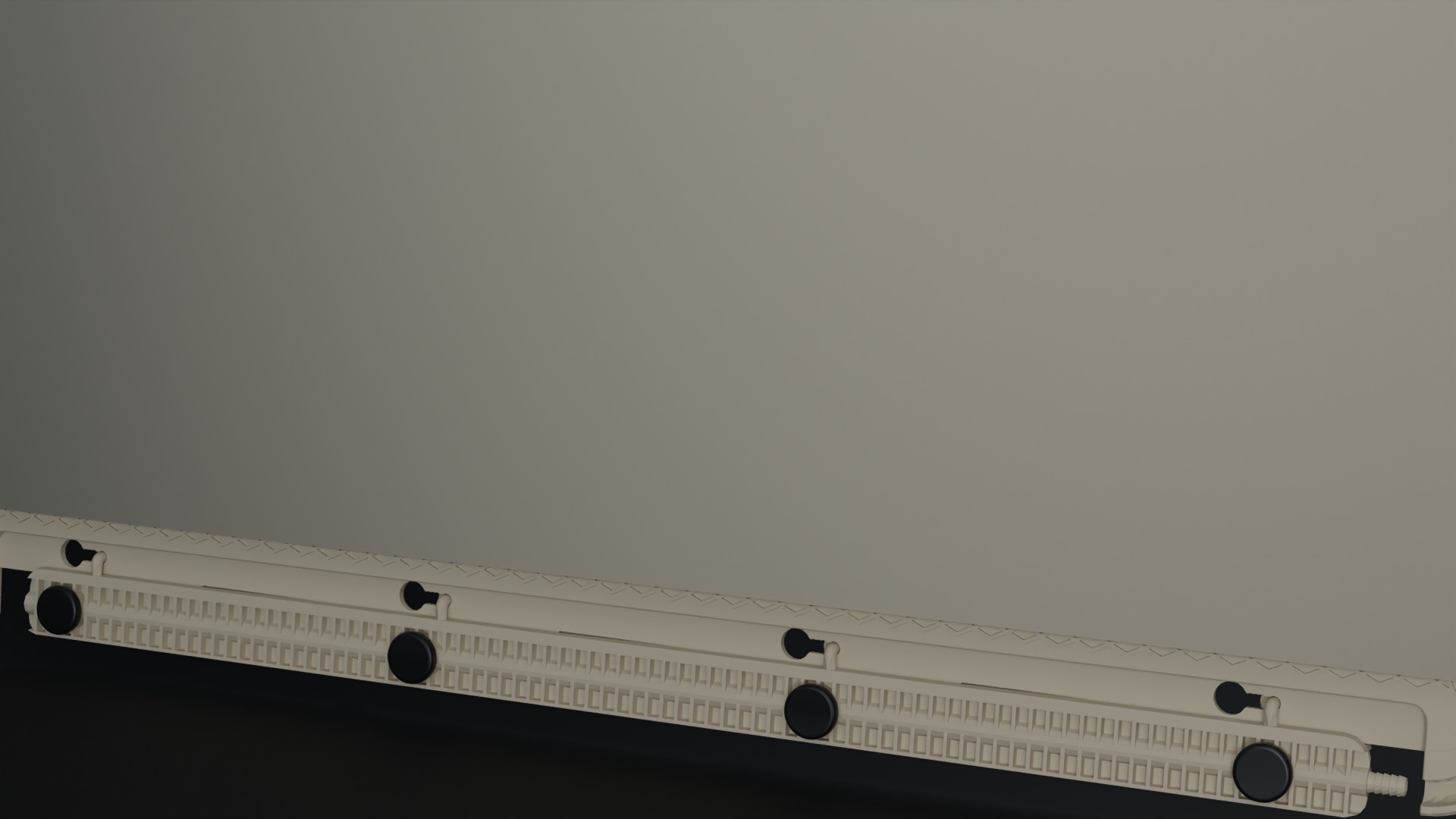
 On-Board Scour
The module that keeps itself clean.
Uniform water velocity between each plate. Channels stay open. You stay out of the tank.
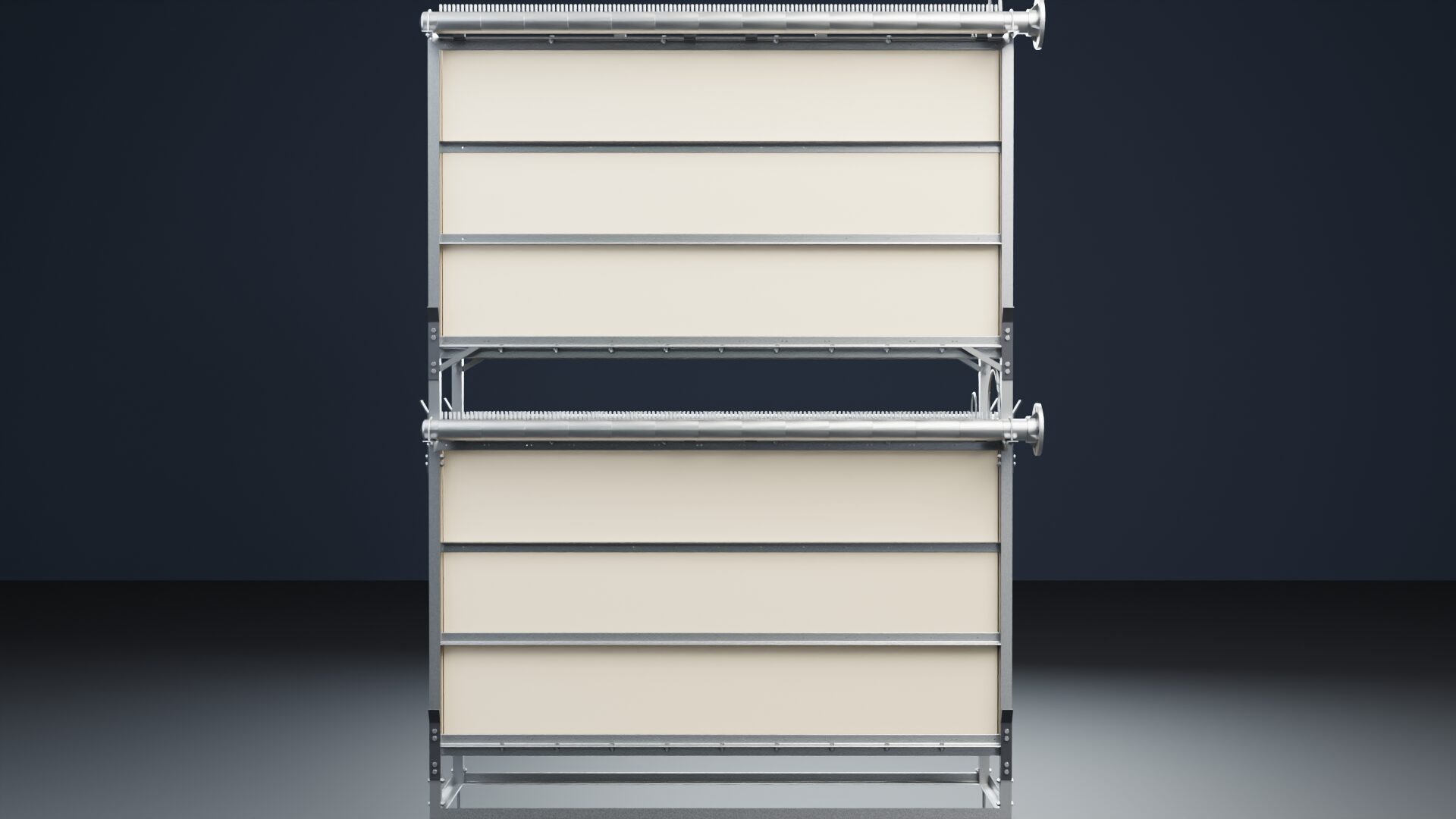
The cassette
Built to drop in
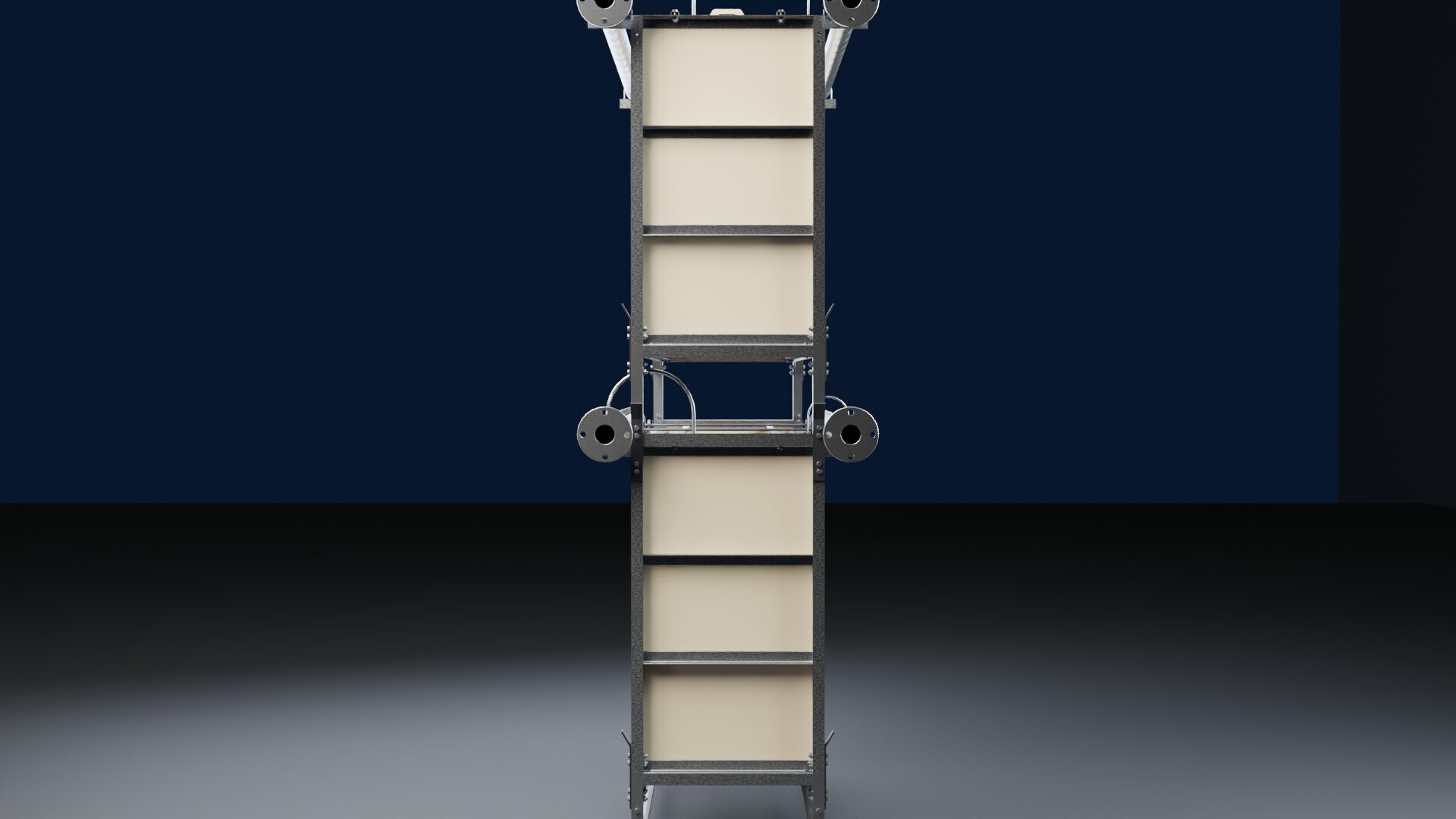
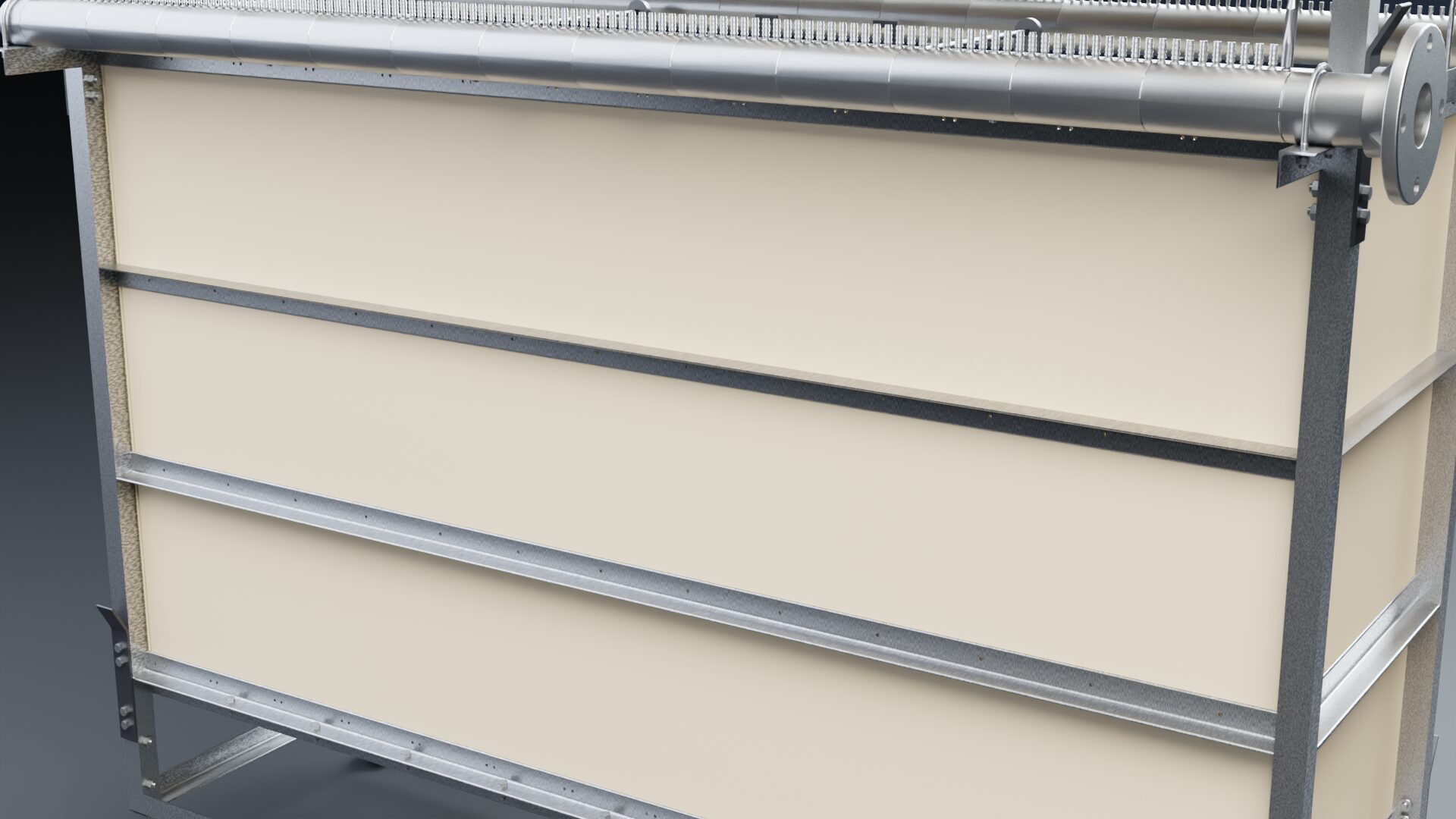
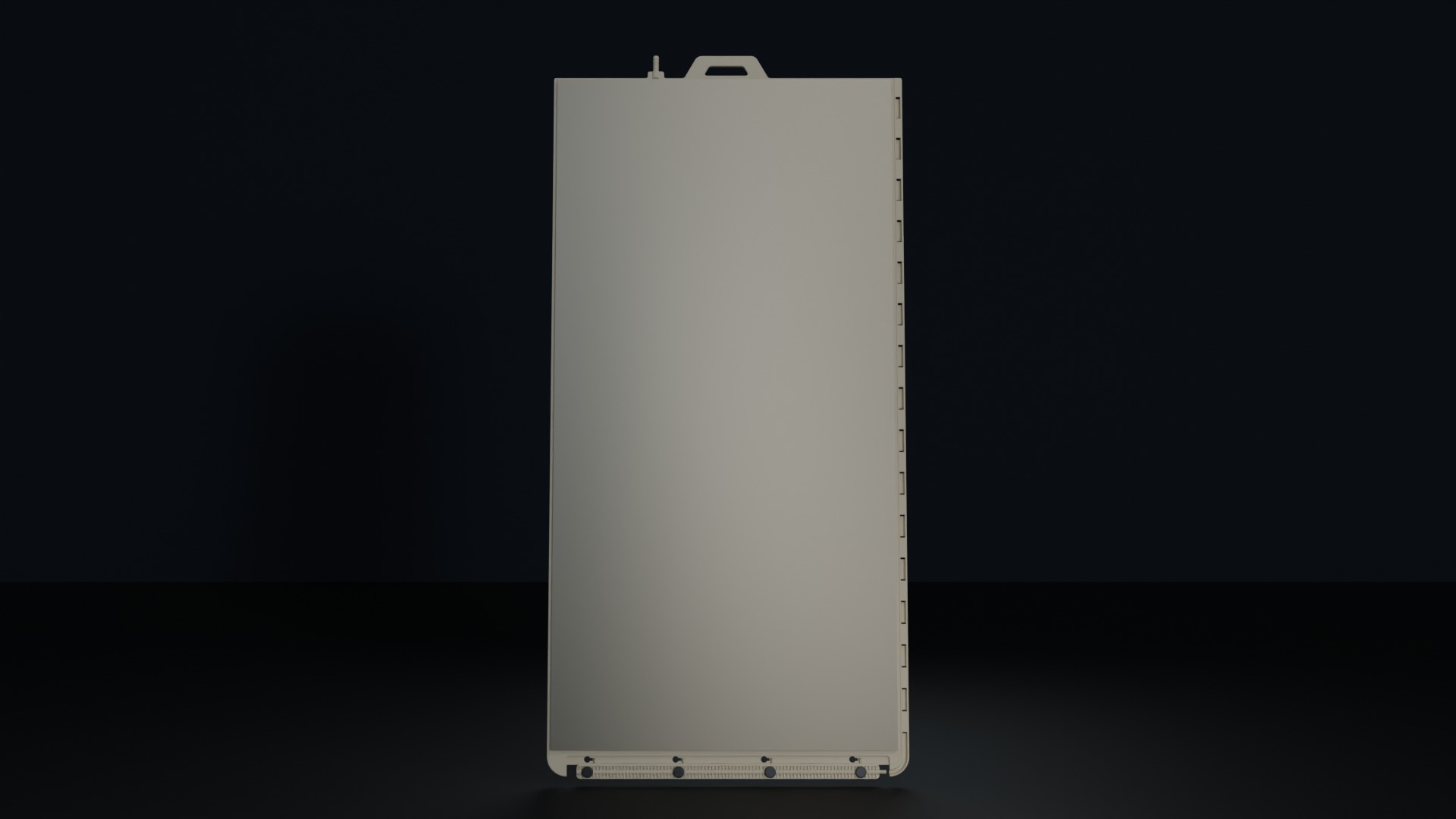
304 stainless frame (316 optional). Dual headers. On-Board Scour on the cassette. Municipal membrane bioreactor service. Built to run submerged.
Installed
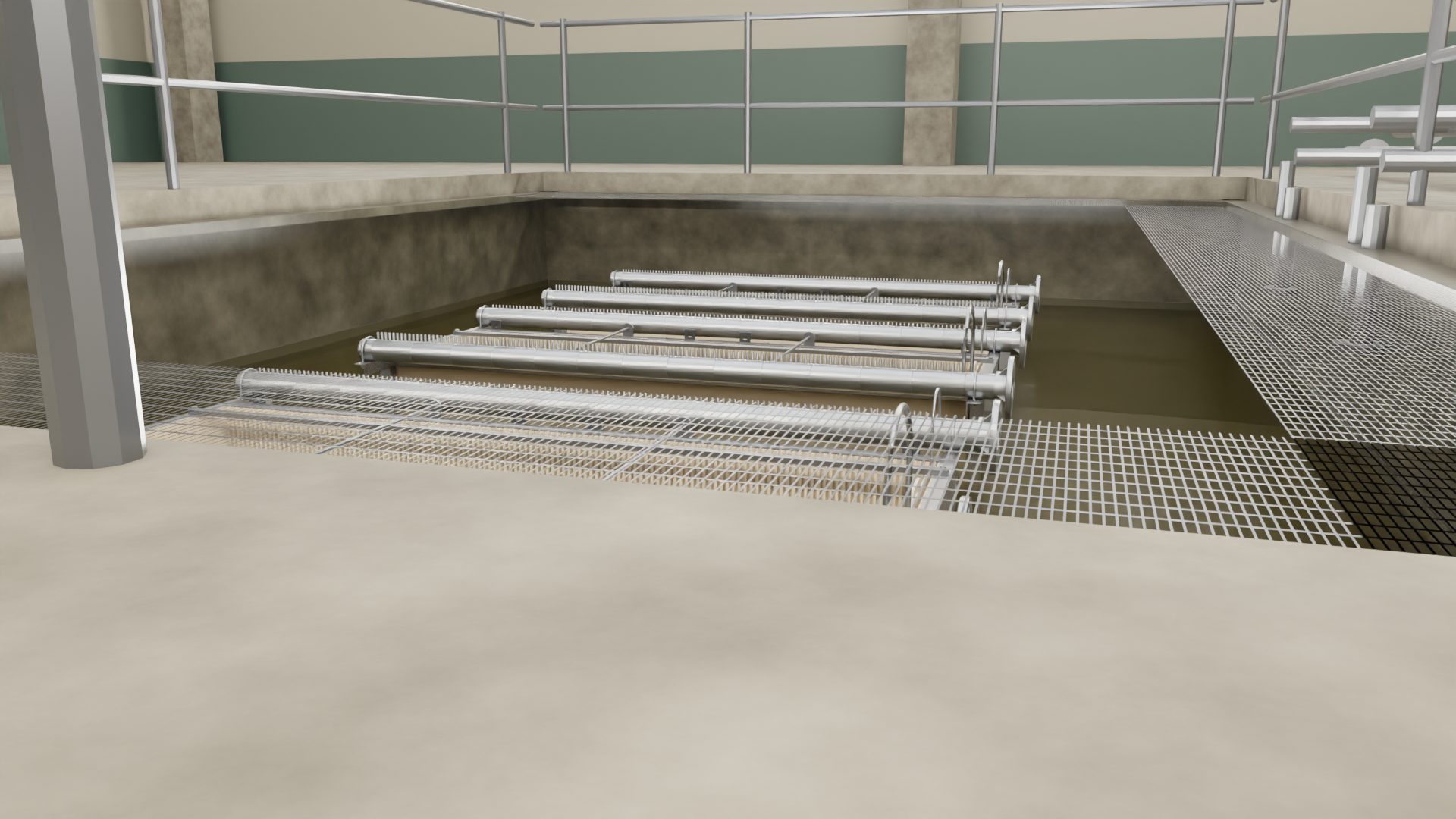
In the tank
Municipal membrane tank. The cassette runs submerged. Rendering.
Install options
Quoted with the module
Lifting attachments, guide rails, and adjustable feet are quoted options. The cassette runs submerged. Yard piping meets the headers.
Why it stays clean
Every channel. Short plate. Real spacing.
Uniform water velocity between each plate. Dedicated scour valve. Same velocity, same scour on every plate.
Plates have room to scour. They are 41.2 in (1,047 mm), so the top of the plate stays clean. Channels stay open. You stay out of the tank.
The polypropylene support plate holds the Thermo Fisher PES sheet. The plate is lightened with a blowing agent. PP is a lighter American-made polymer, from American natural gas. BABA MBR module. BABA (Build America, Buy America) compliant. No PFAS.
Full datasheet, O&M, and warranty are on Downloads.
Cleaning in Place
CIP
CIP restores permeability after scour, relaxation, and flux discipline. This is the clean for the polymer flat-sheet PES cassette.
Physical measures first: scour at every module, the relax cycle, flux at the project design, screening, and MLSS. Chemistry comes with a Zyramic-written recipe for that job — agent, concentration, time, and temperature. Recipes are issued in the project submittal or a later O&M revision. This page does not publish a strength or a soak time.
When a recipe is issued, the work is in-tank. Modules stay submerged. The restraint stays on. Follow the recipe on scour during the soak, and record agent, concentration, temperature, duration, and TMP before and after.
CIP is the clean for this sheet. The PES cassette is not backwashed.
Download the CIP note · Full O&M on Downloads.
Air path
See the air path
Conventional bottom plenum on the left. On-Board Scour on the right. Color is water velocity in the channels. Schematic.
Independent CFD
An independent study compared Zyramic On-Board Scour with a conventional bottom-plenum air scour on identical plate geometry. Near-field liquid shear at the channel base was about four times higher. That is the base, on identical plates. Hydrodynamics. Figures: How it works.